
2010 is the year we
Get To Work.

With ideas and input from thousands of organizers from around the world, we've formed a strategic action plan for 2010.

We will get to work in our communities on climate solutions projects, and we will get to work making political leaders follow our example. It's a plan that may well break the logjam and get us moving. But only if we work together to make it happen.

Read the Full Letter From Bill McKibben »

Hello, I’m from
,
and I am ready to get to work solving the climate crisis. Send updates to me at
and let me know how I can make a difference.

Thanks for signing up--look out for updates in your e-mail box soon!


350 Updates

Getting to work in 2010: Our new plans...


After a month-long retreat in the mountainous US state of Vermont, and following much reflection, listening and movement-storming with allies & organizers from around the world, we're excited to share our new plans for 2010 -- and can't wait to learn what you think! Bill's letter below is about to go out to our entire list -- make sure you're signed up for more exciting updates in 2010!

Dear Friends,

Well, no one said it was going to be easy.
 
Last year, thanks to many of you, we built up enormous momentum for climate solutions. The global day of rallies you pulled off on October 24th turned out to "the most widespread day of political action in the planet's history," according to CNN, with 5200 actions in 181 countries.
 
And in Copenhagen that translated into 117 countries--most of the world's nations--supporting a tough 350 target. 
 
But it didn't translate into political victory. The biggest polluters wouldn't go along. So we still have work to do.
 
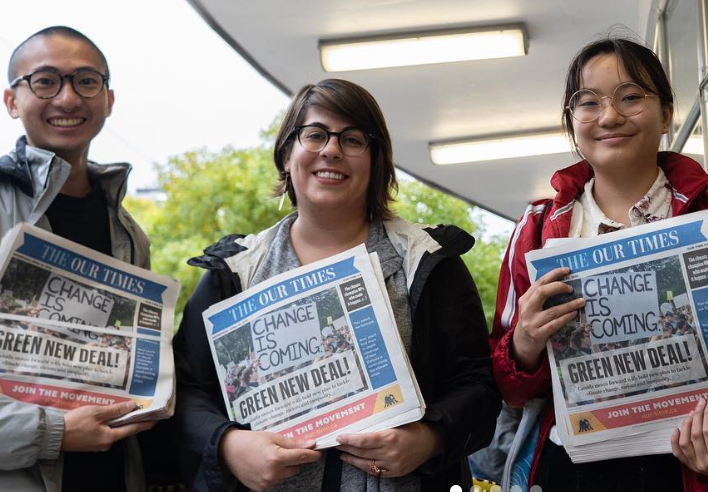
In fact, our slogan for 2010 is "Get To Work." Get to work to start changing our communities, and get to work to make our leaders realize that they actually need to lead. We've sifted through thousands of your emails from all over the world, and come up with an action plan for this year that we think may break the logjam and get us moving. But only, of course, if we act together to make it happen.
 
The first date to mark on your calendar: October 10. Working with our friends at the 10:10 campaign, we're going to make the tenth day of the tenth month of the millennium's tenth year a real starting point for concrete action. We're calling it the 10/10 Global Work Party, and in every corner of the world we hope communities will put up solar panels, insulate homes, erect windmills, plant trees, paint bikepaths, launch or harvest local gardens. We'll make sure the world sees this huge day of effort--and we'll use it to send a simple message to our leaders:  "We're working--what about you? If we can cover the roof of the school with solar panels, surely you can pass the legislation or sign the treaty that will spread our work everywhere, and confront the climate crisis in time." 10/10/10 will take a snapshot of a clean energy future -- the world of 350 ppm -- and show people why it's worth fighting for.  It's not too early to sign up here: www.350.org/oct10
 
Every nation is not created equal in this climate crisis, of course. If we can't get the biggest polluters and the biggest economies to change, then we'll never win. So we're going to focus some particular attention on China, the United States, and India with a Great Power Race--college and university campuses will compete to see who can come up with the most, and the most creative, climate solutions. We hope friendly competition will help governments see that they have a lot to gain by diving into clean energy--and a lot to lose by missing this opportunity.
 
And we'll keep figuring out ways to apply political pressure where it counts--in the U.S. Senate, say, where we're joining a group of our best allies in backing the proposed Cap-and-Dividend approach that would stop letting big polluters pour carbon into the sky for free. In other parts of the world, we'll hold more of the climate leadership workshops that produced so many great leaders last year.
 
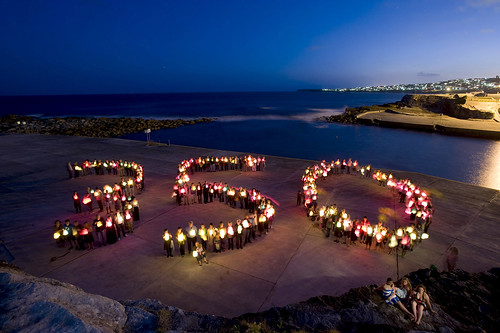
And as the next UN conference approaches in Mexico in December, we'll stage the largest piece of public art in the planet's history--a reminder that we have to bring passion to bear along with science and economics if we're going to move this process.

We know, from the calls and emails we've been getting, that people all over the world are ready to go to work. We think this plan can increase the odds of real action. We know that we have no choice. When, years down the road, the next generation asks what we did to save the planet, we want to be able to say: "We rolled up our sleeves and got to work."  There's no guarantee we can beat the rich and powerful interests that we're up against--but thanks to you we've got enough momentum to have a real chance. Let's use it now.

Onwards,

Bill McKibben and the 350.org Team

P.S. We've learned that there's great power in pictures, and so we decided to make an audio slideshow that walks through our plan for 2010 and how we got here.  Please watch it here, and share the piece with family & friends by spreading this link: www.350.org/audio-slideshow. Also, please forward this message far and wide--2010 needs to be a year of unprecedented growth for this movement. 

P.P.S. We want to know what your reaction is to the plan for 2010--will you share your ideas and thoughts with the Global 350 Facebook Community by leaving a comment in the latest message? (www.facebook.com/350.org)


Asia

Nepal is ready to Get to Work

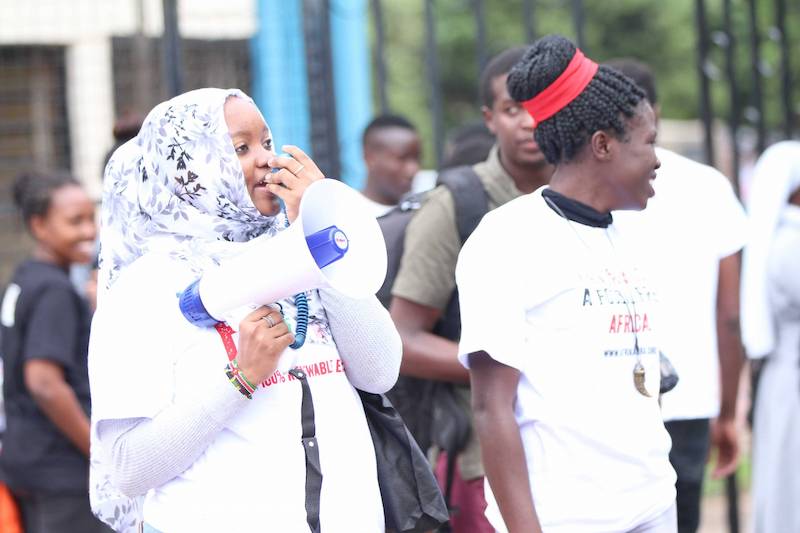
Our friends in Nepal have been busy these last few weeks extending the Nepali youth climate movement to all regions of the country.  The Nepalese Youth for Climate Action emailed this morning explaining that they just wrapped up Western and Far-Western Regional Youth Climate Summits. Abhishek wrote, "Now NYCA has its network almost in every region of Nepal!" And as you can see from the photos below the 350 number is spreading to ever more reaches of the world...


North America

An old and dear friend

Doris Haddock, better  known as Granny D, passed away yesterday at the age of 100--she was a dear friend and a great organizer! 

At the age of 90, she walked across the entire continental United States to demand change in the corrupt way America finances its elections--she understood that as long as corporations controlled the process, it would be hard to make progress on any of the issues that matter. A few years later, she and I were arrested in the first civil disobedience about climate change seen in America--we spent an enjoyable day with a few allies locked up in the Capitol Hill jail. I remember what she told me that day: "I'm 93 and I've never been arrested before--I should have started long ago!"
 
She kept marching and fighting--a couple of years ago she joined many of the 350 organizers for the last mile of a march across her native state of New Hampshire. She is a great hero, and we will carry on her work.

Africa

Clean Energy for South Africa, Not Coal


A few weeks ago, while our team was planning out exciting new campaigns for 2010, we heard something and we couldn't quite believe our ears: The World Bank has proposed to give a US$3.75 billion (R29 billion) loan to Eskom to build a number of new dirty coal-fired and nuclear power plants. The World Bank has a history of financing more fossil projects than clean energy, all in the name of reducting poverty. St the same time, Eskom plans to raise electricity rates 25% annually over the next three years. Big polluters are getting cut-rate electricity - the world's cheapest - while the poorest will face the highest rates in the country.

Dozens of South African environmental, community, church, labour, academic and women's organizations have mobilized, but we need your help sending a message to the World Bank that we won't accept a dirty loan.

Click here to say NO to the dirty World Bank loan to Eskom.


Beauty in Remembering 2009

Two friends deserve special credit for laying down there thoughts on the the climate movement last year, and you all deserve to check out the wonderful ways in which they're telling their stories.

Robert Van Waarden, a photographer and longtime documenter of the climate movement, gave me shivers when I watched his photo compilation on youtube this morning.  The title?  '2009: The Explosion of the Climate Change Movement.'  There's hope for you, and it's amazing to watch.  Along with many of our 350 friends, watch for the good work that so many allies did in other campaigns last year as well - the incredible organizing that went into last year and which will help carry us forward this year.

After that, click through to read a poem by our friend Deepa Gupta, cofounder of the Indian Youth Climate Movement, on what she will remember most from 2009.  If you start getting sad/frustrated in the opening stanzas, read on.

Robert's Compilation:

Deepa's Poem:

The morning that followed
Our message was echoed.
A failure! A failure!
My heart in despair.
 
The science lost, funding tossed,
No commitment in sight.
A stench of injustice,
The result: A failed plight.
 
“What more did you expect?”
Accusing voices chimed,
“Your efforts are a waste
Of carbon, cash and time”.
 
Is it a failure?
Were we mistaken?
How will we remember
Copenhagen?
 
How will we remember
Copenhagen?
 
I will remember the:
 

Getting to work: President Obama pushes "Cash-for-Caulkers"

President Obama is on a tour across the southern USA right now promoting his plans for getting the country back to work. The number one program he highlighted? "Cash-for-Caulkers," a $6 billion proposal to provide cash rebates to people who improve the energy efficiency of their homes. That's right: getting America and the world back to work means investing in clean energy programs that save cash and the climate.

“This is not a Democratic idea or a Republican idea,” Obama told his audience. “This is a common-sense approach that will help jump-start job creation while making our economy stronger.”

Here's why I like this proposal: it gives everyday people the incentive they need to get to work tackling the climate crisis from the ground up. We've spent so long waiting for Congress or the United Nations to take action and repeatedly watched our leaders fail to deliver. It's time to show them how it's done.

That last piece is extra important. Incentive programs like "Cash-for-Caulkers" are no substitute for national legislation or international treaties. We need both. If we're going to get back below 350 ppm, we need action on every level, not just the local.

So, as we get to work implementing projects on the local level, let's tell our politicians that it's time for them to get to work at the national. Like, how about passing some legislation now and then? They can come announce their support for a bold climate policy while they help weatherize my apartment!

And as for President Obama, I hope he continues to build up momentum for a bold clean energy policy in the United States. The rest of the world has waited far to long as the US Congress holds the international climate negotiations hostage. While Obama's at it, how about weatherizing the White House and the US Capitol? Personally, I think President Obama would look good with a green hard hat and caulk gun.


Singapore Runs for 350

The race is on to get back to 350 ppm! On the 20th of March, our friends at the Young National Trade Union Congress and ECO Singapore are planning Run 350, a race through the natural surroundings of Pulau Ubin to promote climate awareness. Registration is now closed -- but if you're in Singapore or have friends in the area, make sure to go out to cheer on the runners.

And that's not all that's planned in Singapore this year. Organizers at ECO Singapore are planning events for Earth Hour, creating resources to help students cut their emissions and run efficiency programs, and strengthening their network throught the country.

ECO Singapore will also be busy in 2010 building an Asian Youth Climate Movement across the region. The ground is fertile for such movement building: last year, thousands of young people in Asia took part in the 350.org campaign. In early October, 350.org brought nearly 80 young people from 14 different Asia countries to Bangok for an Asian Youth Climate Workshop. On October 24, thousands of young people joined rallies across Asia from Bhutan to Indonesia. And in December, dozens of Asian youth attended the Copenhagen climate conference and didn't miss the opportunity to strategize about the months ahead.

ECO Singapore has already opened up "ECO" chapters in Indonesia, Japan, and Malaysia and is looking to expand the Philippines and Thailand in the coming months. They've even got a mascot (pictured right). First up, though, is the race this March. Good luck to all the contestants and many thanks to the organizers for getting the 350 movement off to a great start in 2010!


Our Guy

Jim Hansen is the person most responsible for the 350 movement--he's the NASA scientist whose team demonstrated in 2008 that 350 was the most important number in the world, and that's only the latest of his accomplishments. In 1988 he was the first to warn the US Congress that global warming was real and dangerous. 

Now he's written a remarkable book, Storms of My Grandchildren, that summarizes the latest data in readable and understandable form. If you know people who still doubt the facts about climate change, then this is the book they need. There will soon be Chinese, Malaysian and Italian editions, but for now the book is available most easily in the US, where it has been receiving excellent reviews.  

Ask at your local bookstore or Amazon or Barnes and Noble.  And take a look at this interview with David Letterman.


Getting Ready for Earth Day

There's a lot of good news lately on the grassroots organizing front. On campuses, at churches, on bus tours, all across the U.S., there's a resurgance of practical and political change. It's the kind of inspiration we all need as 2010 kicks off, and as we head towards the historic 40th Anniversary of Earth Day.

In that spirit, we wanted to provide a few bits of information to help you get ready for Earth Day. First, our friends in Massachusetts are at it again. There's a new initiative afoot to help replace 100,000 kilowatt-hours of electricity by helping citizens retrofit their homes. You can learn more the Commonwealth Challenge by watching the video below.

Second, if you're looking for a way to host an Earth Day event in your town, consider screening the wonderful film "No Impact Man," starring 350 Messenger Colin Beavan. A film screening is a great way to bring people together and use it as an opportunity to host a brainstorming session about helping your town lower its negative impacts and up its positive ones! More info can be found here.

On the global scale, our friends at Earth Day Network are the aggregators of all the many activites on Earth Day, so check out their website. There will also be an important international gathering in Bolivia taking place around Earth Day. We'll be there with our friends from throughout the Andes, so check back for updates!


Planning for breakthroughs


In these weeks of post-Copenhagen assessment, everyone is trying to figure out how best to proceed—and one of the most interesting approaches (even if it doesn’t sound so interesting at first) comes from colleagues who are pushing hard for more research and development funding for renewable technology, a so-called ‘innovation agenda.’

To understand its importance, remember how much attention campaigners have paid to raising the price of fossil fuel, with a tax or a cap or some other way to make coal, gas, and oil more expensive. That work continues—but it’s obviously not easy, as events in Denmark and in the US Senate make clear. We’re still, by many accounts, going far too slowly.

You could also work from the other direction: making renewable energy so cheap that it supplants the dirty stuff almost automatically. The Breakthrough Institute and the Truman National Security Project earlier this month convened a collection of groups in Washington, USA to discuss how to build support for public funding for more aggressive research and development spending. The participants included, significantly, Google, perhaps the greatest innovation company on the planet (the 350 campaign anyway seems to run on Gmail, Googledocs, and GoogleEarth), which for several years has been working on a project they call RE<C. They’re hoping for the kind of funding that will put hundreds of thousands of scientists hard at work on the project, and hoping too that it will produce quantum leaps, not incremental improvements, in the efficiency of renewables. Imagine some new idea that suddenly made a solar panel twice as efficient—all our work would get considerably easier. (And in the spirit of cooperation, it's nice to see that Microsoft founder Bill Gates has been making much the same point about technology recently--they may not agree about web browsers, but they're on the same page when it comes to energy). You can see solar panels at the Googleplex headquarters in the picture above.

The conference in Washington was mostly for Americans, but this same kind of work is underway elsewhere. Happily, the same kind of thinking is going on in China and India. In fact, you’ll be hearing more from us as the spring goes on about some plans to spur friendly competition at the grassroots level in the Great Powers.

The other good news is that we can do all of this work at once: make fossil fuel more expensive and make green energy cheaper. We can get started with green energy already, obviously, but the better the technology gets, the easier the transition. 350 is a very tough target—it demands that we follow every lead we can think of.